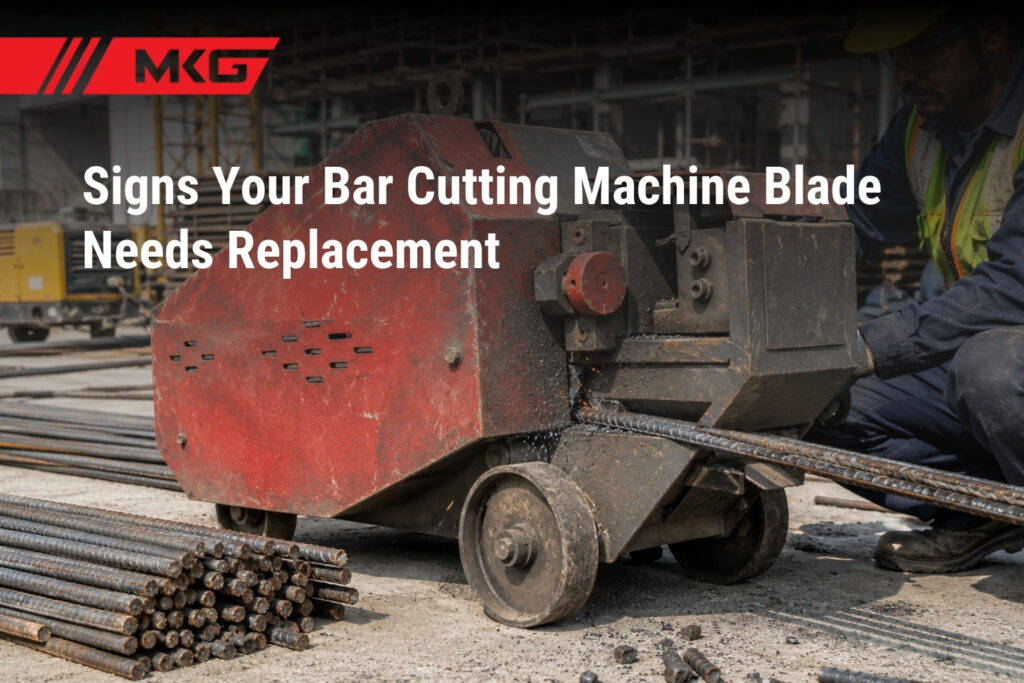
Modern construction thrives on efficiency. On a busy site, your bar cutting machine is constantly slicing through reinforcement steel so that columns, beams and slabs are built to the exact specifications. At MKG, we design bar cutting and bar bending machines that work around the clock without complaining.
But even the strongest machine is only as reliable as its cutting blade. A worn‑out blade can slow down projects, damage rebar and even compromise safety. In this guide, we explain the warning signs that tell you it’s time to replace your bar cutting machine blade, and we show you how to keep your blades in top shape.
Why blade condition matters
The cutting blade is the heart of your bar cutting machine. A sharp, intact blade glides through steel with minimal resistance, producing clean cuts and putting little stress on the motor. When a blade dulls or develops defects, it drags on the steel and forces the motor to work harder. Industry experts note that dull blades cause reduced cutting efficiency, uneven finishes and longer cycle times. This not only delays construction but also increases energy consumption. MKG’s machines are built with powerful motors and robust gear trains, but even they cannot compensate for a blade that has reached the end of its life.
A compromised blade is also a safety hazard. Worn or chipped edges can cause vibrations and noisy operation, which are indicators of imminent failure. If a blade cracks or its teeth break off, fragments can fly off at high speed and injure workers. Recognising the signs of wear early helps you avoid costly downtime, prevent accidents and maintain the quality of your rebar cuts.
1. Slower cutting and increased effort
One of the first things operators notice is that the machine no longer slices through rebar like it used to. A properly sharpened blade should cut with little resistance. If you find yourself pushing harder than usual or the machine stalls mid‑cut, the blade may be dull. In circular saws and industrial blades, slower cutting speed is considered a strong indicator that the cutting edge has worn away. That same principle applies to rebar cutters: dull edges tear through steel rather than slicing it, generating friction and heat.
The physics behind this is straightforward. A sharp blade concentrates force along a tiny edge, easily shearing metal. As that edge rounds off through use, the contact area increases, reducing the pressure applied and forcing you to add physical force to achieve the same cut. Prolonged use of a dull blade forces the motor to draw more current to compensate, causing overheating and possible motor damage.
2. Rough or jagged cut edges
Clean cuts are vital when placing rebars into concrete formwork, because jagged edges create stress concentrations that reduce structural strength. If your cut ends look ragged or deformed, the blade’s edge might be chipped or dulled. Woodworking sites note that dull saw blades produce rough and uneven cuts because they tear through material. In rebar cutting, a dull blade can bend or squeeze the bar before finally snapping it, leaving burrs and uneven ends. Look closely at the cut surface: if it is not smooth or if you see burrs and flattened ribs, the blade is past its prime.
Practically, rough cuts force workers to spend extra time grinding or cleaning the bar ends before welding or tying. That extra step delays bar placement and can lead to accidents if burrs snag gloves or clothing. Replacing the blade restores clean cuts and eliminates the need for rework.
3. Burn marks, sparks or overheating
When a blade has lost its sharpness, it generates friction as it slides through steel. Excessive friction produces heat, which shows up as visible burn marks on the material, smoke or even sparks. In saw blades, burn marks on wood or metal are a clear sign that the blade is no longer cutting efficiently.
On a bar cutting machine, overheating can cause the blade and the gear box to heat up quickly, sometimes accompanied by a burnt‑metal smell. If you see sparks flying off the rebar, it means the blade’s cutting edge is worn down and is rubbing the steel rather than shearing it. Continuous overheating also transfers thermal stress to the motor and bearings, shortening the life of the entire machine.
4. Increased vibration and noise
Vibration and unusual sounds are among the most reported signs of blade wear. A well‑balanced blade runs smoothly, but when it chips, bends or loses teeth, it becomes unbalanced. Users of circular saws note that worn blades create shaking or wobbling, causing unnecessary noise and motion.
For bar cutting machines, vibration means more than discomfort – it can lead to inaccurate cuts, faster wear on bearings and bolts, and operator fatigue. Listen for grinding, scraping or screeching noises. If your machine sounds louder or harsher than normal, stop using it and inspect the blade. Operating a machine under heavy vibration puts extra stress on mechanical components and may result in premature failure.
5. Visible cracks, chips or missing teeth
Regular visual inspection should be part of your maintenance routine. Look closely along the blade’s cutting edge for nicks, chips or missing segments. A blade with structural damage is unsafe. A large chips and cracks make the blade unsafe, as a cracked blade spinning at high speed can shatter.
On a rebar cutter, cracks and chips may occur if the blade strikes a hard object—such as a piece of aggregate stuck to the bar or after prolonged use. Missing chunks or broken teeth reduce the number of effective cutting points, increasing stress on the remaining teeth. If any cracks or chips are visible, replacement is the only safe option, as sharpening cannot repair structural defects.
6. Blade warping or bending
Blades must remain flat to cut evenly. Warping or bending happens when the blade is exposed to excessive heat, or when it encounters hard knots or foreign objects. Warped blades produce uneven cuts and can rub against the saw housing, creating sparks and excessive wear. If you lay a blade on a flat surface and see it does not sit evenly, it has warped.
On a bar cutting machine, a warped blade may wobble as it spins and cause the motor to vibrate. Warping often gets worse with use, and bending it back is not advisable; attempts to straighten the blade can introduce micro‑cracks that lead to catastrophic failure. Replacing a warped blade ensures accurate cuts and reduces strain on your machine.
7. Frequent sharpening with diminishing results
Sharpening can extend a blade’s life, but it is not a permanent fix. Experts note that persistent dullness after sharpening, thinning of the blade’s body and reduced cutting depth indicate that a blade has been sharpened too many times. Each sharpening removes metal, so over time the blade becomes thinner and weaker, flexing during cuts and leading to uneven results.
If you find that the blade needs sharpening more often and the improvement lasts only a few cuts, you may have reached the point of diminishing returns. Continuing to sharpen a blade beyond its safe thickness can cause it to flex or crack. In such cases, investing in a new blade is cheaper and safer than risking a mishap on site.
8. Uneven wear or reduced diameter
Good blades wear evenly across all teeth. Uneven wear – where one section appears more worn than another – can indicate misalignment, poor cutting technique or poor quality bonding. Such irregular wear shortens the blade’s life and leads to poor results. Another indicator is a significant reduction in blade diameter. The diameter naturally reduces; once it shrinks past a certain point, cutting depth is limited and safety is compromised.
For bar cutters, the blade diameter determines how large a rebar you can cut. A worn blade might not fully engage the bar, leaving it partly uncut. Pay attention to any reduction in blade size or uneven wear patterns, and replace the blade once it approaches the manufacturer’s minimum usable diameter.
9. Excessive motor load and energy consumption
If you notice that your bar cutting machine’s motor is drawing more current than usual or that the machine is overheating, the blade could be at fault. Industrial blade manufacturers observe that worn blades can cause machinery to work harder, resulting in higher energy consumption. This happens because a dull blade increases friction, forcing the motor to generate more torque.
From a practical standpoint, increased motor load can trip breakers, blow fuses or overload electrical circuits, interrupting your workflow. By replacing the blade when necessary, you reduce the strain on your motor and extend its lifespan.
10. Machine downtime or jamming
Unexpected downtime is expensive. When a blade is no longer performing optimally, it can cause machinery to jam, overheat or malfunction. Jams occur when a dull or damaged blade binds in the rebar rather than cutting cleanly. Clearing a jam requires stopping the machine, releasing the bar and inspecting for damage—activities that stall your crew’s progress.
Frequent downtime due to blade issues signals that the blade must be replaced. A fresh blade restores smooth operation and reduces the chances of unplanned stops.
11. Inconsistent rebar length or quality
Precision is everything in reinforced concrete construction. If cut bars vary in length or show inconsistent quality, the blade may be the culprit. Dull blades struggle to cut uniformly, leading to variations in length or burr formation. Industrial experts emphasize that inconsistent product quality—such as uneven edges or improper shapes—is a sign that blades have lost their sharpness.
On site, inconsistent bar lengths mean delays because bars need to be trimmed again or replaced. Maintaining a sharp blade ensures consistent quality, reduces rework and keeps your schedule on track.
12. Rust, corrosion or pitting
Blades are susceptible to corrosion, especially on humid or coastal sites. Severe rust or corrosion weakens the metal and ruins the cutting edge. Signs include pitting, flaky or soft metal and rust around the centre hole. Corrosion weakens the blade, making it dangerous to operate at high speeds.
If light rust can be cleaned off, you may continue using the blade. However, when pitting or corrosion penetrates deep into the blade or when rust around the arbor hole causes wobbling, replacement is necessary. Using a corroded blade risks breakage and injury. Keeping blades clean and dry, and applying anti‑rust coatings, can delay replacement.
13. Forced cuts and operator fatigue
Another subtle sign is the amount of effort the operator must exert. A high‑quality bar cutting machine should let you cut with minimal force. If you must lean in or use your body weight to complete a cut, the blade is likely worn. Diamond blade guides point out that forcing a cut overheats the blade and reduces cut quality. Besides fatigue, forcing cuts increases the risk of accidents because it reduces control over the machine.
Replacing the blade restores the machine’s ease of use and reduces strain on your workers. Remember: the right tool should work for you, not the other way around.
14. Uneven or missing segments and broken teeth
For blades with segmented edges, such as some rebar cutting blades, segments may wear unevenly or break off. Blades Direct notes that uneven segment wear, missing segments or sparks during cutting are signs of an exhausted blade. When segments break, the cutting surface becomes discontinuous, causing vibrations and poor cut quality.
Similarly, blades with individual teeth can suffer loose or broken teeth. Tongyang’s blade experts caution that missing or loose teeth create uneven pressure, which leads to vibration and rough edges. If you observe gaps where teeth have fallen off, or if teeth move when touched, do not continue cutting – replace the blade immediately.
15. Age of the blade and hours of use
Even if a blade appears intact, age can degrade its performance. Manufacturing sources explain that blades deteriorate over time due to exposure to moisture and environmental factors. They recommend replacing blades that are significantly older than the typical lifespan – even if they haven’t reached the end of their rated hours—because hidden fatigue or corrosion may not be visible.
For most bar cutting blades, manufacturers specify a certain number of hours or number of cuts after which the blade should be replaced. Exceeding the rated lifespan increases the likelihood of sudden failure. Keeping a log of machine usage helps you track blade life and schedule replacements before problems arise.
Why timely replacement is critical
Replacing a blade is not just about maintaining cutting speed. It’s about protecting your crew and your equipment. Continuing to use a dull or damaged blade escalates wear on the motor, gearbox and bearings. It increases energy costs and can lead to expensive repairs or a complete machine overhaul. More importantly, a failed blade can cause accidents, leading to injuries or costly project delays.
Timely replacement keeps your bar cutting machine operating efficiently, ensures that rebar is cut accurately and helps meet project timelines. Planning blade changes as part of your preventive maintenance schedule reduces downtime and enables you to order spare blades before an emergency arises.
Extending blade life: best practices
While replacement is inevitable, there are several ways to maximise blade life and avoid premature wear:
- Use the right blade for the job: Different blades are designed for specific materials. Using a blade optimised for rebar cutting ensures it can handle the hardness and diameter of steel bars. Cutting other materials can dull or damage the blade.
- Operate at correct speed and feed: Running the machine at the recommended RPM and feed rate reduces heat buildup and wear. Feeding too fast can chip teeth, while feeding too slowly causes abrasive wear.
- Avoid forcing the cut: Let the machine do the work. Forcing the cut increases friction and heat, which damages the blade.
- Clean and lubricate: After each shift, wipe down the machine and blade to remove dust, cement splatter and debris. Lubricate moving parts to reduce friction, as explained in our passenger hoist maintenance guide.
- Inspect regularly: Perform daily visual inspections for cracks, chips or wear. Weekly inspections should include checking the blade’s alignment and ensuring the arbor nut is tight. Early detection prevents accidents and downtime.
- Store blades properly: When not in use, keep blades in a dry, padded case to prevent rust, warping or accidental damage.
By following these practices, you can get the most out of every MKG blade and delay replacement without compromising safety or performance.
Conclusion
A bar cutting machine blade usually gives warning signs before it completely fails — and that’s exactly why regular attention matters. If cuts start getting rough, the machine needs more force, or you notice extra noise and vibration, it’s a clear sign that your blade should not be ignored any longer.
The smartest approach is to treat blade condition as part of regular machine care. Replacing a worn blade at the right time helps you maintain clean cuts, protect the machine, and avoid unnecessary downtime on site. If you want to explore reliable site-ready equipment, check our Bar Cutting Machines.
If your work also involves shaping rebars after cutting, the next step is just as important. Our Bar Bending Machines are built to support fast, accurate, and smooth rebar processing on demanding construction sites.
At MKG, we build machines for real construction conditions – long hours, heavy-duty use, and tough site environments. When you replace blades on time and take care of your machine properly, your work stays accurate, your team stays productive, and your project keeps moving without avoidable delays.
Talk to MKG’s team today if you need help choosing the right machine or support for your site.
info@mkgworld.in
+91 9922 39320
MKG – Built for performance. Built for construction.