Moving heavy materials vertically is a daily reality on construction sites. For high‑rise projects, temporary hoists are the lifeline that keeps bricks, steel and workers flowing to upper floors. However, these machines are only safe when used within their rated capacity.
Overloading a material hoist is one of the most frequent mistakes builders make, and it has serious consequences: it can damage the equipment, injure workers and stall progress. This guide explains why overloading happens, what risks it introduces, and how to avoid it, drawing on industry research and our own experience at MKG.
Why Understanding Overloading Matters
Every hoist is engineered to lift a maximum weight. This value, known as the safe working load, reflects the strength of the hoist’s frame, motors, brakes and supporting structures. When operators exceed this limit – intentionally or by mistake – extra forces act on gears, ropes and components.
Industry specialists note that overloading causes stress fatigue throughout the structure of the hoist and its crane base, leading to motor failures, cable breakage, damaged rotating mechanisms and frame warping. These stresses accumulate over repeated lifts and can cause catastrophic failure without warning, making it critical to respect the rated capacity on every job.
At MKG, we design ourbuilder tower hoist andVimaan passenger and material hoist to handle substantial loads with safety features such as brake motors, limit switches and overload protection. But even the most robust equipment will fail if it is consistently pushed beyond its design limits. By understanding the common causes of overloading, site managers can prevent costly downtime and protect their crews.
What Counts as “Overloading”?
A hoist is considered overloaded whenever the force required to raise the load exceeds the hoist’s rated capacity or when the load pulls more current than the motor is designed to handle. In manual hoists, a warning sign is when operators need two people or a cheater bar to lift a load that should be manageable by one person.
Safety experts point out that using extenders on lever hoists is a red flag: if it takes more than the specified pull force to raise a load – 58 lb of pull for a one‑ton hoist in one example – then the hoist is overloaded. In powered hoists, audible clues such as grinding, creaking, erratic movements or slipping loads indicate an overload condition.
Common Causes of Overloading
Below are the most frequent reasons material hoists exceed their limits. Each cause is followed by practical advice on prevention. In every case, pre‑planning, training and the right equipment are your best defences.
1. Miscalculating Load Weight
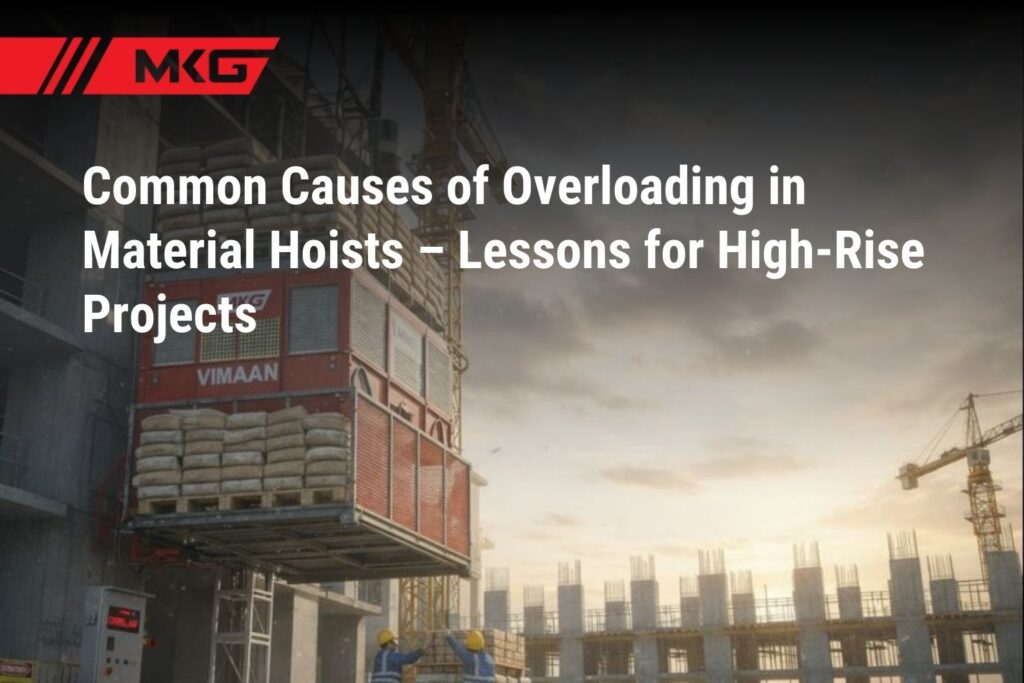
One of the simplest ways to overload a hoist is by underestimating how much a load weighs. Materials such as wet concrete, sand or bricks absorb water and become heavier than expected. Workers sometimes add extra pallets or bundles at the last minute to “save a trip,” not realising they have tipped the load past the hoist’s limit.
Engineers note that knowing the weight of the object you’re lifting is essential and that operators should never exceed the working load limit. The scientific rationale is straightforward: the safe working load is the maximum load the system can handle without inducing stress beyond the material’s yield strength. Exceeding it risks permanent deformation or sudden failure.
Prevention: Calculate the weight of materials beforehand and include moisture content. Use scales or load cells where possible, especially for bulk materials like mortar or concrete. Post the hoist’s load limit near the controls and train operators to adhere to it. Our Vimaan hoists come with clear load‑rating plates, and ourHow to Choose a Construction Hoist guide explains how to match hoist capacity to material requirements.
2. Dynamic Loading and Sudden Movements
Static load is only half the story. During lifting, loads can sway or drop slightly, creating dynamic forces that exceed the hoist’s rating. Sudden starts or stops and wind gusts on high‑rise sites add momentum, increasing tension on the rope or chain. Technical guidance warns that repeated overloading can cause stress fatigue and may lead to motor malfunctions, cable or chain breakage, rotating mechanism damage and frame warping. In other words, dynamic forces accelerate wear and shorten equipment life.
Prevention: Accelerate and decelerate slowly when operating the hoist. Avoid sudden stops that create shock loads. Use tag lines to control swinging loads, and consider rack‑and‑pinion systems such as the Vimaan hoist, which provide smooth, variable‑frequency‑drive (VFD) control. For windy conditions, schedule lifts when gusts are minimal or use wind‑break enclosures. Training operators to anticipate swing and inertia reduces dynamic overload.
3. Improper Rigging or Attachment
Even when the hoist itself is rated correctly, poor rigging can concentrate loads on a single point, effectively overloading the hook or attachment. Attaching a load off‑centre, using frayed slings or not balancing the load causes uneven stress on the hoist. Improper rigging also increases the risk of dropped loads and accidents, making it a double hazard. Studies on hoist accidents list poor rigging alongside overloading as a primary cause of incidents.
Prevention: Use slings and shackles rated for the weight being lifted and inspect them regularly. Distribute the load evenly and secure all corners. Never suspend a load from an unknown or improvised attachment point. MKG’s tower hoists include robust buckets and baskets designed to hold materials evenly; for custom loads, consult a rigging specialist or refer to ourtower hoist safety inspection checklist.
4. Inadequate Operator Training
Many overload incidents stem from human error. Operators may not know the hoist’s capacity, misread the load rating or assume it is safe to exceed the limit “just this once.” They might ignore audible signs of strain or use makeshift leverage to lift heavier loads. Training operators on proper rigging techniques and hoist operation and having rigging manuals available on site are key measures to prevent overloading. Proper training also covers understanding pull‑to‑lift forces; if a manual hoist requires more than the specified effort, it is overloaded.
Prevention: Provide formal training on hoist capacity, load calculation, rigging and signalling. Refresh this training regularly and supervise new operators. Encourage a safety culture where workers feel comfortable stopping a lift if they suspect an overload. Use signage to reinforce the maximum capacity and highlight the consequences of overloading.
5. Mechanical Wear and Lack of Maintenance
Over time, components in the hoist – such as brakes, gears, wire ropes and clutche – wear out. A worn brake lining can allow the load to drift or slip after you stop the hoist. Damaged gears or brake coils reduce the hoist’s ability to hold weight and can give a false sense of security until they fail under stress. Worn frames and masts are more likely to crack when overloaded. Essentially, a neglected hoist has a reduced safe working load even if the original rating plate says otherwise.
Prevention: Follow the manufacturer’s maintenance schedule. Inspect the hoist daily for cracks, rust, loose bolts and worn parts. Replace worn brake linings and adjust the brake air gap according to the manual. Our Vimaan hoists include an easy‑access inspection panel and built‑in limit switches that prevent lifting if a fault is detected. We also offer a passenger hoist maintenance guide for detailed service intervals.
6. No Overload Protection Devices
Not all hoists are equipped with devices to detect and prevent overloads. Articles on hoist design warn that many hoists do not come with built‑in overload protection unless it is specifically requested. Without a slip clutch, load sensor or limit switch, the operator may not realise the hoist is overloaded until something breaks. Manufacturers provide several types of overload protection:
- Slip clutches: mechanical devices that slip when a pre‑set load is exceeded.
- Electro‑mechanical devices: springs or load beams that trigger a microswitch to stop the hoist.
- VFD monitoring: variable frequency drives monitor motor current and shut down the hoist if it draws too much current.
- Load pin sensors: strain‑gauge sensors in the hoist’s dead‑end connection measure force and cut power at a set threshold.
Prevention: Choose a hoist with built‑in overload protection. MKG’s Vimaan uses limit switches and overload detectors to automatically stop lifting if the load exceeds the capacity. When ordering any material hoist, specify the overload protection method appropriate for your project.
7. Environmental Factors and Site Conditions
Conditions on a construction site can affect the hoist’s effective capacity. Wind loads on high floors add horizontal forces that increase tension on the hoist mast. Corrosion from salt air (common in coastal cities) weakens metal components, reducing their load‑bearing ability. Uneven ground or misaligned masts cause off‑axis loading and jerky operation. Poor weather can make materials heavier (rain‑soaked sand weighs more) and reduce visibility, encouraging shortcuts. These factors make a hoist more prone to overload without careful planning.
Prevention: Erect hoists on stable, level foundations and use tie‑ins to the building at specified intervals. Inspect masts and anchors regularly. Schedule lifts during favourable weather. If working in corrosive environments, choose hoists with galvanized or coated components and follow a strict lubrication schedule. Educate crews about how environmental conditions influence load calculations.
Practical Tips to Prevent Overloading
Avoiding overloads isn’t about luck; it’s a combination of knowledge, discipline and the right equipment. Below are practical steps to integrate into your site routine:
- Pre‑operation inspections: Before each shift, check the hoist for cracks, worn parts and proper functioning of brakes and limit switches.
- Use load monitoring: Equip hoists with sensors or scales to verify the weight before lifting. Slip clutches or load pin sensors can stop lifts automatically when an overload is detected.
- Follow manufacturer guidelines: Read and follow the instructions in the hoist’s manual. Do not exceed the recommended pull‑to‑lift force for manual hoists.
- Plan your lifts: Break large loads into smaller batches and avoid adding “just one more bag” to save time. This reduces dynamic loading and keeps within the safe working load.
- Train your team: Provide regular training on hoist operation, rigging and load calculations. Encourage workers to stop a lift if it seems unsafe.
- Choose the right equipment: Select a hoist with the capacity and features needed for your project. The MKG builder hoist handles up to 1 ton of material and can be extended as the building grows, while the Vimaan is available in 1–2 ton capacities for both passengers and materials.
Schedule maintenance: Regular lubrication, brake adjustments and replacement of worn parts prevent capacity reduction due to wear.
High‑Rise Construction Challenges and How MKG Solves Them
Overloading often arises from broader challenges in high‑rise projects. Understanding these obstacles helps in choosing equipment and planning workflows. Below are seven common challenges and solutions drawn from industry sources and our own experience.
1. Site Logistics and Congestion
Urban plots are cramped, with little space for storing materials or placing cranes. Studies on high‑rise projects note that congested sites make crane placement difficult and vertical movement of materials a continual puzzle. Logistical bottlenecks drive up costs and delay schedules.
Solution: Use a builder tower hoist to eliminate manual hauling and reduce site congestion. Ourtower hoist lifts up to 1 ton of material to 200 ft, with a brake motor to keep loads steady. Because the hoist is modular, it climbs with the building and requires minimal ground footprint. Careful scheduling of lifts keeps materials moving smoothly.
2. Vertical Transportation Bottlenecks
On high‑rise projects, the few available elevators become choke points for workers and supplies. Waiting for an elevator slows productivity and frustrates crews. Industry research shows that inefficient vertical transportation reduces productivity and leads to complaints.
Solution: Our Vimaan passenger and material hoist addresses vertical bottlenecks. It uses a rack‑and‑pinion drive with VFD controls for smooth rides and offers capacities up to 2 t, with speeds between 20–60 m/min. The twin‑cage version transports workers and materials simultaneously, effectively doubling throughput. Limit switches, overload protection and buffer springs ensure safety.
3. Safety at Height and Worker Protection
Falls and dropped objects are major hazards in high‑rise construction. Risk analyses highlight that working hundreds of feet above ground exposes crews to serious injuries. Improperly maintained hoists or overloaded platforms amplify these risks.
Solution: Safety is built into every MKG hoist. Our Vimaan features overspeed governors, emergency stop buttons and limit switches on doors and travel points. Our tower hoist safety inspection blog teaches crews how to perform daily checks for dents, rust, loose bolts and frayed ropes. Regular inspections catch issues early and prevent accidents.
4. Structural Loads and Wind Effects
Tall buildings behave like sails in the wind. Engineers note that high‑rise structures must withstand lateral loads from wind and seismic activity. If the hoist tower is not robustly built or properly anchored, wind can cause pendulum‑like swinging that stresses the mast and increases the risk of overloading.
Solution: We fabricate hoist towers and platforms from high‑strength steel and anchor them securely to the building’s structural core. Our builder hoist uses wire ropes up to 12 mm diameter and thick steel columns, ensuring stability even in gusty conditions. Tie‑ins at regular intervals prevent sway, and our team advises on anchorage plans to resist wind loads.
5. Regulatory Approvals and Compliance
High‑rise projects must satisfy a labyrinth of codes related to structural stability, fire safety, noise and environmental impact. Using non‑compliant hoists or failing to document their features can result in shutdowns. Experts emphasise that overloading a crane violates standards set by organisations such as OSHA and ASME.
Solution: All MKG hoists meet or exceed Indian BIS standards. We provide documentation of overload protection, limit switches and safety signage to satisfy inspectors. Our choose the right hoist guide advises checking compliance certificates and ensuring that overload protection meets regulatory requirements.
6. Fire Safety and Emergency Preparedness
During construction, buildings often lack fire‑rated walls and permanent stairs, making evacuation challenging. Industry sources warn that high‑rise sites under construction are vulnerable to fire, with exposed hoistways and incomplete escape routes.
Solution: Our hoists are equipped with manual brake releases, overspeed governors and emergency stop systems that can be activated from multiple points. Operators are trained to use hoists for evacuation only when safe and to switch to stairs if necessary. Installing hoists early in the project supports emergency planning by providing reliable vertical access for firefighting equipment and injured workers.
7. Environmental Sustainability and Equipment Longevity
Sustainability is a growing concern in high‑rise construction. Large machines consume energy and generate emissions. Waste from disposable or low‑quality equipment also contributes to the carbon footprint. Analysts argue that high‑rise projects must balance height with renewable energy and low‑embodied‑energy materials.
Solution: We engineer our hoists for durability and long service life. By using high‑quality components and emphasising preventive maintenance, we extend equipment life and reduce waste. Our hoists can be reused on multiple projects, and we offer reconditioning services to refurbish older machines. Long‑lasting equipment reduces the need for new manufacturing and lowers environmental impact.
Conclusion
Preventing overloading in material hoists isn’t just about following rules – it’s about protecting people, equipment, and the entire construction timeline. From incorrect weight estimates to rushed loading and lack of inspections, small mistakes can quickly turn into costly failures. That’s why choosing the right hoisting system matters more than ever.
At MKG, we design every Tower Hoist and Vimaan Passenger & Material Hoist to handle real-world site pressure – high loads, tight schedules, and challenging heights. With strong structures, reliable motors, and built-in safety features, our equipment helps you move materials without pushing machines beyond their limits.
Whether you’re building a mid-rise or a high-rise, safe load handling keeps your project moving smoothly, reduces downtime, and keeps your crew protected.
Let’s build safer, faster, and smarter construction sites – together.
Talk to MKG’s technical experts today to choose the right hoist and load capacity for your project.
MKG – Built for safety. Built for the future.