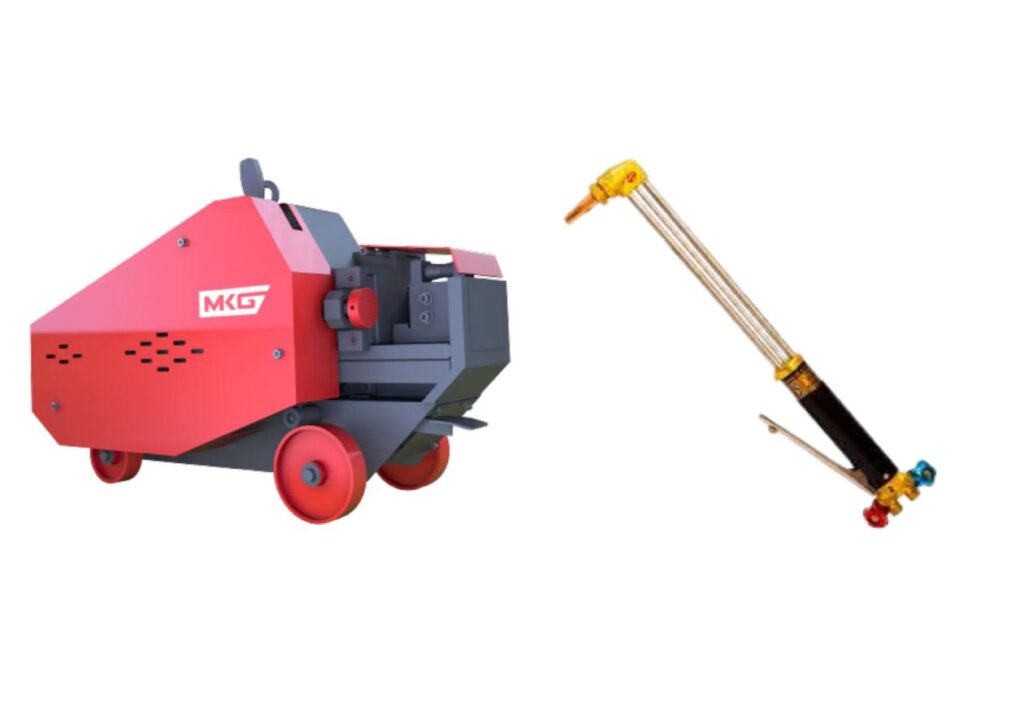
Cutting reinforcement bars (rebar) is one of those jobs that happens on every construction site – whether it’s a small residential building or a big infrastructure project. The way those bars are cut decides more than just the length of the steel – it can affect the strength of the structure, the project timeline, and even site safety.
In India, where speed and cost-efficiency matter just as much as reliability, the choice between using a bar cutting machine or a gas torch becomes a big decision for contractors and site managers. Pick the wrong method, and you risk delays, weaker rebar joints, or higher long-term costs.
That’s why it’s worth looking closely at both options. At MKG, we believe in building smarter, safer, and stronger, which is why we’re putting the two methods head-to-head – so you can make the right call for your site and keep projects moving on time without compromising quality.
Bar Cutter vs Gas Torch: Quick Comparison
Many site engineers just want a straight answer – which method saves time, keeps rebar strong and is safer to use on-site? Here’s a quick, side-by-side look to help you decide:
| Aspect | Bar Cutting Machine | Gas Torch Cutting |
| Speed & Productivity | Cuts rebar in seconds, perfect for bulk work. Machines like MKG’s C-40, C-45, C-50 can handle up to 40–50 mm bars with consistent cycles/min. | Slower for large volumes. Requires setup, preheating and post-cut grinding to clean edges. |
| Cut Quality & Precision | Clean, straight, burr-free cuts that match exact site measurements – no rework needed. | Irregular cuts with slag and rough edges; usually needs grinding and adjustments. |
| Rebar Integrity (HAZ Effect) | No heat = no change to rebar strength or ductility. Maintains structural integrity as per design. | Creates a Heat-Affected Zone (HAZ), making rebar brittle and prone to cracks or corrosion. |
| Safety | Enclosed mechanism, no sparks or flames. Lower risk of burns, fire and accidents. | Open flame + explosive gases = fire hazard. Needs strict safety protocols and skilled handling. |
| Cost & Long-Term Value | Higher upfront cost but lower running cost (electric power). Saves money over project life through less waste and labour. | Low upfront cost but higher recurring costs (gas, skilled labour). More hidden costs due to rework and slower cutting. |
| Portability | Available in compact, easy-to-move models (MKG C-45 is just ~425 kg). Works on most sites with power supply. | Very portable, no power required – but cylinders and hoses are heavy to transport safely. |
| Skill Required | Easy to operate with basic training – ideal for semi-skilled workers. | Needs trained operator to avoid mistakes and safety risks. |
Why the Cutting Method Impacts Strength and Safety
Structural Integrity & Safety
When you cut rebar, you’re not just changing its length – you’re deciding whether it will stay strong enough to hold your building together.
- Gas torch cutting uses an open flame at extremely high temperatures (up to 3,500°C) to melt through steel. This creates what engineers call a Heat-Affected Zone (HAZ) – a band of metal around the cut where the microstructure has been changed by heat.
- Strength Drops: The steel becomes harder but also more brittle. That means it’s more likely to crack under load.
- Bond with Concrete Weakens: The rough, slag-covered surface doesn’t grip concrete as well, which can cause problems in lapping and anchorage.
- Faster Corrosion: Heat-damaged steel is more prone to rust, reducing the life of the reinforcement.
- A bar cutting machine avoids all this. It uses mechanical shearing – a cold cut that leaves the steel’s grain structure untouched. The rebar keeps its original strength, ductility and fatigue resistance – exactly what the structural engineer counted on when designing your slab or column.
Safety: Controlled vs. Risky
On a busy construction site, safety is non-negotiable.
- Gas Torch = Fire Risk: Open flames, sparks and gas cylinders on site mean a constant risk of fire, explosion and toxic fumes. It also demands skilled operators and strict fire watches.
- Bar Cutting Machine = Controlled Process: No flame, no toxic fumes, no gas cylinders. The cutting point is enclosed, which shields workers and reduces accident chances. It’s simple enough for semi-skilled labour to operate safely with basic PPE.
Boost Site Productivity and Meet Deadlines
On a construction site, every day counts. Delays in rebar cutting don’t just hold up one task – they can delay concrete pouring, inspections and every other stage that follows. Choosing the right cutting method can literally save you days, even weeks, on a large project.
Speed and Consistency That Adds Up
- Bar Cutting Machine: Modern electric or hydraulic bar cutting machines, like those from MKG, cut rebar in just 2 seconds per piece. One person can cut hundreds of bars to the exact length in a single day – no need to mix gas, preheat anything, or clean up burnt edges afterward. It’s quick, clean and repeatable – like using a guillotine to slice paper in one go.
- Gas Torch: A gas torch can melt through rebar, but it takes more time overall. First, you have to mix the gases, light the flame and wait for it to get hot enough. After every cut, you also need to clean off the rough, melted edges. In tests, a torch took 5+ seconds just to cut #6 rebar – more than double the time of a bar cutting machine and that doesn’t include the extra setup and cleanup time.
Impact on Deadlines and ROI
Contractors who switch from torches to bar cutters consistently report measurable gains:
- Faster Completion: Rebar prep finishes 10–20% quicker, enabling earlier concrete pours and inspections.
- Lower Material Waste: Scrap is reduced from 5–10% (torch cutting) to just 3–5% thanks to precise length control.
- Labour Savings: Machines cut faster and need fewer workers, reducing labour cost per ton of steel cut.
Heavy-duty models like MKG’s bar cutters are built to handle up to 32 mm rebar and are engineered for hundreds of cuts per day – ideal for large projects that run on tight schedules.
Choose the Right Cutting Solution for Your Project
Not every construction site is the same and neither is every rebar cutting requirement. The right equipment depends on the size of your project, the volume of rebar you need to cut and how important speed, safety and precision are for you.
When a Bar Cutting Machine is the Smart Choice (Most of the Time)
For 99% of modern construction jobs – residential towers, commercial complexes, bridges, or infrastructure projects – a bar cutting machine is the professional choice. Here’s why:
- Structural Integrity: Cold shearing means no Heat-Affected Zone (HAZ) and no compromise on rebar strength.
- Speed & Deadlines: Handles hundreds of cuts per shift, helping you stay on schedule.
- Safety: No fire risk, no explosive gases, no need for fire watch teams.
- Cost Efficiency: One-time investment, very low running cost, minimal scrap wastage.
When a Gas Torch Might Still Make Sense (Rare Cases)
To keep it fair, a gas torch is still useful in some limited situations:
- Demolition Work: Cutting old embedded steel that is being removed.
- Scrap Management: Breaking down leftover steel for disposal.
- Remote Sites Without Power: When electricity isn’t available and portability is the only priority.
But using a gas torch for new structural rebar cutting is risky and can lead to failed inspections or weaker concrete joints – something no contractor wants.
What to Consider Before Buying
Before you invest, ask yourself:
- How much rebar do I need to cut daily?
- Do I have power available on site (or should I choose a portable hydraulic model)?
- Are there strict safety requirements on my project?
- Do I want to reduce labour cost and meet tight deadlines?
If your answer is “yes” to most of these, a bar cutting machine is the way forward.
Conclusion
At MKG World, we understand that construction isn’t just about finishing the job – it’s about doing it right, on time and without compromising on quality or safety. That’s why our Bar Cutting Machines are built for Indian job sites – to give you clean, precise cuts, speed up your work and keep your team safe.
From housing projects to bridges and metro sites, MKG machines handle tough site conditions and heavy workloads with ease. They are reliable, easy to operate and designed to reduce downtime – so your project keeps moving forward, day after day.
If your next project demands efficiency and compliance without blowing the budget, MKG is your trusted partner.
Email us:info@rajat-group.com | sales@rajat-group.com
Call us:+91 88899 00105
Take the first step towards faster, safer and smarter construction. Talk to our experts today and find the perfect cutting solution for your site.
Frequently Asked Questions
1. Does gas torch cutting weaken rebar?
Yes. Gas torch cutting creates a Heat-Affected Zone (HAZ) that changes the rebar’s microstructure, often making it brittle and reducing tensile strength. This can compromise the load-bearing capacity of the concrete. MKG bar cutting machines use a cold shearing process, so the rebar’s strength and ductility remain intact – exactly as your engineer specified.
2. Which is faster for bulk rebar cutting – bar cutter or gas torch?
For large projects, a bar cutting machine is much faster. MKG machines can cut rebar in seconds, one after another, with consistent precision. Gas torches may seem quick for a single cut, but setup time, preheating and post-cut cleanup make them inefficient for bulk cutting.
3. Which method is safer for workers?
Bar cutting machines are safer. MKG machines have enclosed mechanisms and run on electricity, eliminating fire risks, explosive gases and toxic fumes. Gas torches require strict safety measures (ventilation, fire watch) and still carry a risk of accidents.
4. Which method costs less in the long run?
Gas torches have a lower upfront cost, but ongoing expenses (gas refills, skilled labour, rework costs) add up. MKG bar cutting machines have a higher initial investment but much lower operating costs, making them more cost-effective for contractors who cut rebar regularly.
5. Are there situations where a gas torch is still useful?
Yes, but only in special cases like demolition, scrap cutting, or one-off cuts in remote locations with no power. For all new structural work, MKG bar cutting machines are the safer, faster and more reliable option to stay compliant and avoid project delays.