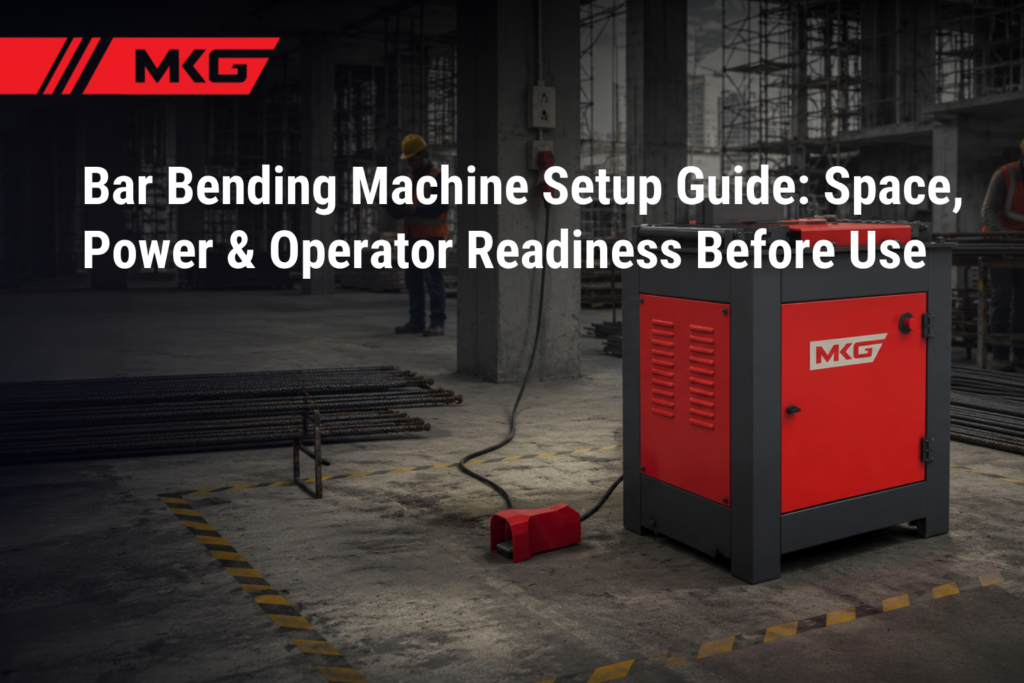
When it comes to shaping steel reinforcement, a bar‑bending machine is the unsung hero of almost every building site. It turns raw steel bars into precisely bent stirrups, hooks and L‑shaped elements that keep beams and slabs strong. However, simply buying a bender and plugging it in isn’t enough.
At MKG we design bar‑bending machines that are reliable, powerful and built for India’s demanding job sites. In this guide, we’ll share how to set up your machine correctly so you can get the most from it. We’ll cover space planning, electrical power requirements and operator readiness – so you can bend bars safely and efficiently from day one.
Why a Proper Setup Matters?
A properly prepared workstation isn’t just about neatness – it’s about safety, productivity and long‑term equipment health. When a machine sits on uneven ground or is powered through undersized cables, it vibrates, overheats and performs poorly. That can cause inaccurate bends, sudden breakdowns and safety hazards. Likewise, operators who haven’t read the manual or inspected the machine can miss defects or overload the machine beyond its rated capacity.
Standards and manuals from leading manufacturers emphasise that machines must be mounted on a level, even surface and connected to appropriate power cables. Safety guidelines also stress regular pre‑operation checks and proper personal protective equipment. Following these basics means your machine lasts longer, your team stays safe and your project stays on schedule.
Plan Your Workspace: Space & Site Preparation
Choose a Level, Solid Base
Bar‑bending machines exert high torque. Placing them on uneven or unstable ground leads to vibration, inaccurate angles and even accidents. User manuals recommend installing the machine on a level, even surface and if the ground is uneven, use an auxiliary base strong enough to support the bender rigidly. A concrete slab or sturdy steel frame works well. Avoid placing the machine on loose soil, timber pallets or makeshift supports.
Provide Adequate Clearance
Space around the machine is just as important as what’s underneath it. There should be enough room for operators to feed long bars and remove bent pieces without obstruction. Position the machine so that no wall or obstacle blocks the rotating disc or prevents operators from moving around it.
A good rule of thumb is to leave at least 1.5–2 metres of clear space on all sides. This prevents workers from bumping into moving parts and gives them room to handle long bars safely.
Think About Workflow & Material Storage
Organise your yard so that bundles of straight bar are stored close to the bender and finished pieces can be stacked neatly nearby. Avoid lifting bars over the machine or across walkways; this reduces the risk of tripping and damage to material. If you’re working on a tight site, consider placing the machine near the rebar cutting area to minimise material movement.
Our MKG bar‑bending machines have compact footprints yet generous working discs, making them ideal for sites with limited space. When assessing which machine suits your site, factor in not only the machine’s footprint but also the clearance needed for feeding material.
Electrical Power & Grounding: Getting the Supply Right
Bar‑bending machines rely on electric motors to generate torque. Feeding them with the wrong voltage or inadequate wiring can damage motors or trip breakers, and it’s a common cause of breakdowns on Indian sites. Always check the machine’s nameplate or manual for the required voltage, phase and power rating. MKG machines are available in 3‑phase configurations to deliver consistent bending power while minimising energy consumption.
Use the Correct Cable Size and Length
Undersized cables overheat and cause voltage drops, reducing motor efficiency. The using a conductor of at least 5.5 mm² cross‑section for single‑phase machines and restricting cable length to 50 m. If you need a longer run, upgrade to at least 8 mm² to compensate for the extra resistance. Larger machines may require 3‑phase connections; consult your electrician to size cables appropriately. Use industrial‑grade copper cables and avoid coiling extension leads, as coils act like heaters.
According to Ohm’s law, long or thin cables have higher electrical resistance, which causes voltage drop and heat. That can trigger motor overloads and reduce bending torque. Oversized cables keep voltage stable and maintain motor efficiency, reducing energy loss and preventing premature motor failure.
Install a Dedicated Switch & Earthing
Never connect a bar‑bending machine directly through its control button. Instead, install a dedicated iron‑shell switch or circuit breaker near the machine so operators can disconnect power quickly during emergencies. The machine body must also be properly grounded. Grounding prevents electric shock if a fault occurs and ensures residual current devices trip as intended. On portable machines, check that the grounding cable is securely clipped to a grounding rod or earthing point before use.
Check Power Supply Compatibility
Assess the on‑site power supply before placing your machine. Are 3‑phase sockets available? Is the voltage stable or prone to fluctuations? If the supply is unreliable, consider using a stabiliser or generator that meets the machine’s starting and running power requirements. Our MKG range includes models with integrated soft‑start and overload protection to handle power fluctuations. When selecting a machine, verify that it matches your site’s available power and any control panel requirements.
Safe Bending Procedures
Respect Capacity & Bending Angles
Every bar‑bending machine has a maximum bar diameter and number of bars it can bend simultaneously. Exceeding these limits puts stress on the motor and gears, leading to failure. Check the machine’s capacity plate and never exceed the stated diameter. For high‑hardness or low‑alloy steel bars, follow the instructions on the machine nameplate regarding allowable diameters and mandrel replacements. Selecting the correct mandrel prevents the bar from kinking or fracturing.
Position and Feed Bars Correctly
Insert the bar fully into the fixed gap of the turntable so it is firmly held. Align the bar parallel to the table to avoid twisting. Select the right rollers or pins based on bar thickness – incorrect rollers can cause uneven bends. Keep hands away from the bending area and do not try to reposition the bar while the machine is running.
Avoid Adjustments During Operation
Once the machine is running, avoid changing mandrels, adjusting speed or refuelling. Sudden adjustments can cause mechanical shock and damage internal gears. Always wait until the turntable stops before changing direction or resetting the angle. If you hear unusual noises, stop the machine immediately, disconnect the power and report the issue to maintenance staff.
Support Long Bars & Manage Materials
Bending long rebars requires additional support. Use trestles or helpers to hold the free end so that the bar doesn’t whip around when the bend forms. For short pieces, maintain a firm grip but keep your hands clear of the rollers. Stack semi‑finished products neatly and avoid upward‑facing hooks to prevent tripping hazards.
Do Not Remove Safety Guards & Stay Focused
Protective covers over gears and pulleys are there for a reason – they prevent accidental contact with moving parts. Never operate the machine with guards removed. Do not operate the machine if you are unwell, tired or distracted. Maintaining focus reduces the likelihood of fingers getting caught or bars fracturing unexpectedly.
Post‑Operation: Cleaning & Maintenance
When you finish bending, run through a shutdown routine. Clean the table, disc and rollers using a brush (never compressed air) to remove dust and bar chips. Inspect the machine for cracks, loose bolts or wear. After heavy rain or in monsoon season, open the covers and dry the machine thoroughly – moisture can cause electrical leakage and shock. Lubricate moving parts and reapply protective coatings if paint has chipped. Finally, switch off and lock the power supply to prevent unauthorised use.
Operator Training & Documentation
Safety doesn’t end with a checklist. Provide operators with a comprehensive safety manual and hold regular training sessions to reinforce safe practices. Visual aids like posters and demonstration videos help new workers understand the bending process. Keep maintenance and inspection records – they not only help plan servicing but also show regulatory inspectors that you’re adhering to standards. At MKG, we supply manuals and offer on‑site training through our dealer network.
Common Mistakes to Avoid
Even experienced crews can slip into bad habits. Here are some pitfalls to watch out for:
- Using makeshift power connections – never connect your bender through undersized extension cords or informal wiring. It risks overloading and fire.
- Placing the machine on uneven ground – vibrations lead to inaccurate bends and wear. Level the surface or build a sturdy platform.
- Skipping warm‑up – cold gears and oil increase strain on the motor. A brief idle run extends machine life.
- Removing guards for convenience – it exposes you to moving parts and contravenes safety rules.
- Exceeding capacity – overloading the machine or bending high‑strength bars without proper mandrels damages gears and causes accidents.
- Lack of PPE – gloves, goggles and sturdy footwear are basic necessities.
- Ignoring abnormal sounds – they often signal worn gears or motor issues; shut down and investigate.
Avoiding these mistakes is simple but crucial for safe and efficient bending.
MKG’s Commitment to Reliable Bending Solutions
At MKG, we believe that reliable equipment is the foundation of every successful construction project. Our bar‑bending machines are engineered with heavy‑duty brake motors, hardened gears and precision angle controls to deliver accurate bends every time. Models such as the MKG GW42 and GW50 offer adjustable angle stops for repeated bends and robust frames that withstand Indian job‑site conditions.
We also supply bar cutting machines, concrete mixers, hoists and other construction equipment. For an integrated approach to rebar processing, read our blog on How Bar Cutting and Bending Machines Improve Site Productivity. These resources complement the setup guide you’re reading and show how our machines work together to streamline projects.
Conclusion
A bar-bending machine performs best when the setup is done properly before the first bar is bent and that’s exactly why space, power and operator readiness should never be treated as small details.
The smartest approach is to keep the machine on level ground, provide enough working space around it, use the correct power connection, and make sure the operator is trained before use. These simple checks help you get accurate bends, protect the machine, and avoid unnecessary downtime on site.
At MKG, we build machines for real construction conditions – long working hours, heavy-duty site use, and tough project timelines. When your setup is right from the beginning, your machine runs better, your operator works safer, and your project moves forward without avoidable delays.
Talk to MKG’s team today if you need help choosing the right bar-bending machine or setting it up correctly for your site.
info@mkgworld.in
+91 9922 39320
MKG – Built for performance. Built for construction.