High‑rise buildings change skylines, but they also bring one stubborn problem: how to move people and heavy materials 50 floors up without wasting time or risking injuries. If you’ve ever climbed a few floors on scaffolding, you know how tiring it can be. That’s where passenger hoists become the unsung heroes of modern construction. As the team behind MKG, we’ll explain in simple terms why these machines matter, how to pick the right one and why our Vimaan Passenger & Material Hoist is making waves across India.
High-rise projects often face space, safety and vertical movement challenges, so it helps to understand the top challenges in high-rise construction before selecting the right passenger hoist.
What Exactly Is a Passenger Hoist?
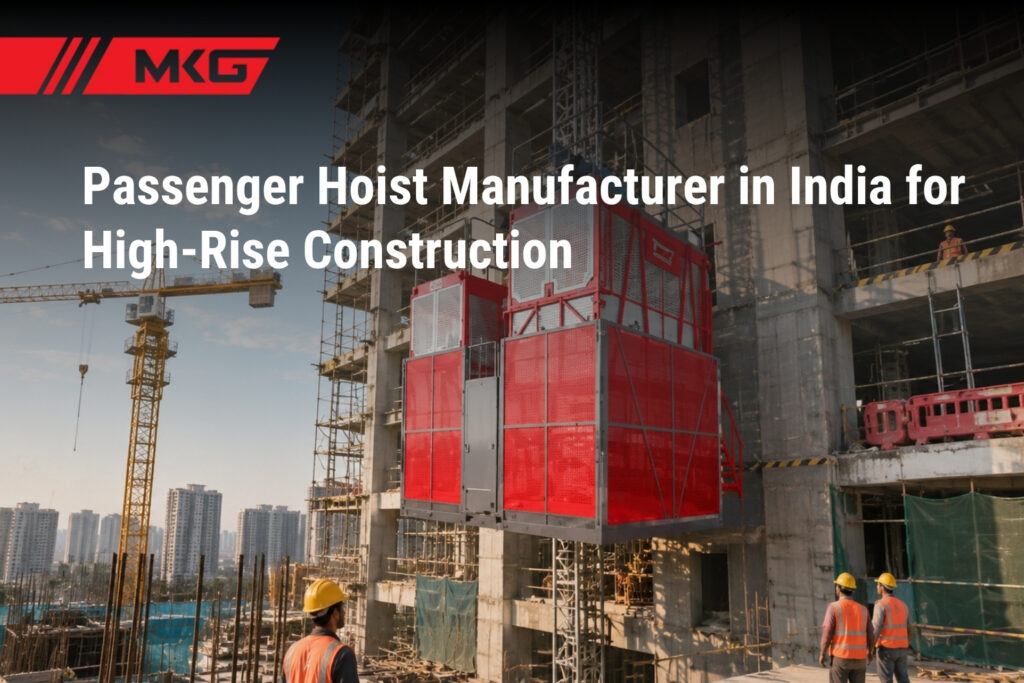
On a construction site a passenger hoist is a temporary lift mounted on a steel mast outside the building to carry workers and sometimes materials between floors. Unlike permanent elevators that rely on counterweights and ropes, most construction hoists use a rack‑and‑pinion system – a motor‑driven gear (the pinion) travels along a toothed rack mounted to the mast, providing smooth and controlled vertical movement. This design makes them sturdy enough for rough construction conditions and modular enough to be extended as the building rises. For high-rise projects that need safe worker movement and material lifting, MKG’s Vimaan Passenger and Material Hoist is built to support smooth, reliable vertical transport on busy construction sites.
A passenger hoist is often confused with a material hoist. Here’s the difference:
- Passenger hoists: enclosed cages with safety interlocks, brakes and comfortable cabins designed to ferry workers quickly and safely. They typically carry 10–30 workers and have speeds up to 60 m/min.
- Material hoists: open platforms without passenger safety gear; built solely for lifting bricks, steel or glass panels. Capacities may exceed 5 tonnes.
- Dual (passenger + material) hoists: versatile machines that switch between people and materials, saving space and time. Our Vimaan can be configured this way.
Understanding the type helps contractors pick the right equipment for their project’s needs. If you are still comparing different lifting options, our guide on how to choose the right construction hoist explains how capacity, speed, height and site layout affect the final decision.
Why Passenger Hoists Matter in High‑Rise Construction
1. Boosting Efficiency and Productivity
Time is money on a construction site. Studies show high‑speed passenger hoists can speed up project completion by about 30 %. A Mumbai case study cited by industry sources reported that implementing modern hoists across multiple projects led to a 50 % reduction in transport‑related delays and a 30 % improvement in overall efficiency. Less waiting around for materials and fewer missed deadlines mean higher productivity. For contractors trying to reduce delays across multiple site activities, our blog on how to improve site productivity with MKG machines explains how mechanised equipment saves time and improves consistency.
2. Reducing Worker Fatigue and Accidents
Climbing temporary stairs or scaffolding multiple times a day drains energy and increases the risk of falls. Medical research shows that ascending just five flights of stairs can elevate heart rate and fatigue levels significantly, which in turn reduces concentration. By providing a smooth ride to the desired floor, passenger hoists minimise exertion, allowing workers to focus their energy on the job. The CPTC guide notes that modern hoists reduce the risk of falls through interlocked doors, emergency brakes and anti‑fall devices.
3. Controlling Site Congestion
Urban sites like Mumbai or Delhi are often cramped. When separate stair towers, cranes and manual labour are used for vertical movement, ground areas become cluttered. Preston Hire highlights that centralised hoist systems minimise ground‑level vehicles and manual transportation, easing congestion and streamlining workflow. Dual‑cage hoists further alleviate bottlenecks by moving people and materials simultaneously.
4. Ensuring Compliance and Safety
Construction is one of India’s riskiest industries, accounting for a quarter of all workplace fatalities. Regulations such as IS 12466 and the National Building Code (NBC 2016) specify that temporary hoists must have overload protection, emergency brakes and regular inspections. Many international standards like EN 12159 and ANSI A10.4 likewise require limit switches, overspeed governors, and interlocks. A modern passenger hoist helps sites meet these requirements while keeping workers safe.
A passenger hoist is only one part of the larger site setup, so our guide on the top construction equipment used for high-rise building projects gives a wider view of the machines needed on tall structures.
Types of Hoists and Selecting the Right One
1. Passenger Hoists
These are ideal for high‑rise residential or commercial projects where hundreds of workers need to move daily. Typical capacities range from 1 tonne to 3 tonnes (10–30 workers). Speeds may vary between 20 and 60 m/min; faster models reduce wait times but may cost more. If your project emphasises worker safety and speed, passenger hoists are the go‑to choice.
2. Material‑Only Hoists
For transporting heavy loads like concrete blocks, steel bars or glass panels, material hoists offer rugged platforms without passenger safety features. Capacities can exceed 5 tonnes and are useful for heavy lifting but require a separate system for workers..
When material movement is your main concern, proper setup matters just as much as capacity, and our material hoist lift installation guide explains the basics clearly for site teams.
3. Passenger + Material Hoists (Dual Purpose)
Urban projects often opt for dual hoists to save space and improve efficiency. These allow one cage to carry workers while the other transports materials independently. Our Vimaan series features dual‑cage models with load options of 1 tonne, 1.5 tonnes and 2 tonnes per cage.
4. Mini Lifts
For low‑rise buildings or light‑duty tasks (such as moving tools or 200‑kg cement bags), compact mini lifts are affordable and easy to install. They work well up to about 10–15 m and reduce reliance on manual lifting.
5. Single vs. Twin Cage
- Single cage: simpler and cheaper; works well for small sites or low worker volumes.
- Twin cage: two independent cages run on the same mast, enabling one to transport people while the other carries materials simultaneously. Twin cages nearly double throughput and suit busy, high‑rise projects.
Many contractors confuse worker movement with material lifting, so this detailed comparison of tower hoist vs passenger hoist can help you understand which machine suits which job.
Key Selection Factors
The Vertikal and MKG blogs highlight a few essential considerations when choosing a hoist:
- Load capacity and height – Determine your heaviest expected load (people + materials) and ensure the hoist can handle it. High‑rise towers need modular masts that extend as the building grows. Overloading is one of the fastest ways to damage lifting equipment, so contractors should also understand the common causes of overloading in material hoists and how to avoid them.
- Speed – Typical speeds range from 36–45 m/min for general projects; high‑traffic sites may require 60 m/min to avoid bottlenecks.
- Project duration and rent vs. buy – Short projects benefit from renting, which often includes installation and operator support. Long‑term or repeat users save by purchasing and customizing their hoist. If you are unsure whether to invest in a hoist or use one only for a short project, this guide on rental vs purchase for vertical construction equipment will help you compare both options.
- Safety features – Overload protection, emergency brakes, door interlocks, limit switches and anti‑fall devices are non‑negotiable. Before finalising any passenger hoist, contractors should check the core safety systems. Our guide on passenger hoist safety features you should never ignore explains why brakes, limit switches and overload protection matter.
- Compliance and certification – Look for equipment that meets IS 12466, NBC 2016 and CE/ANSI standards. Skipping compliance invites legal issues and project shutdowns.
- Maintenance and training – Choose manufacturers that provide operator training and after‑sales service. Daily checks for brakes, ropes and safety devices are recommended, while thorough inspections should occur weekly or monthly. Proper training prevents misuse and accidents.
What Makes a Passenger Hoist Safe?
Safety mechanisms are at the heart of any passenger hoist. The CPTC guide lists essential components for high‑rise hoists:
- Limit switches prevent the cage from traveling beyond its intended path.
- Overspeed governors stop the hoist if it descends too quickly, averting free‑fall accidents.
- Door interlocks ensure doors remain closed during travel.
- Anti‑fall devices (centrifugal brakes or rack‑searching mechanisms) protect against sudden drops.
- Emergency brakes engage when standard brakes fail.
- Buffer devices absorb impact in emergencies.
- Overload sensors block operation if weight exceeds safe limits.
- Enclosed cages and mast protection shield occupants from wind and debris.
Our Vimaan series includes additional protections such as rack searching limit switches, buffer springs, manual brake release systems, a ground enclosure with hooter, and a dead mast with half rack at the top for redundancy. These features go beyond mandatory standards to enhance on‑site safety.
Inside the MKG Vimaan Passenger & Material Hoist
Built for Indian Job Sites
At MKG we know that Indian construction sites have unique challenges: monsoon rains, narrow streets, and projects that stretch across months or years. That’s why Vimaan is engineered with robust components such as Schneider control panels and PBL geared motors for long service life. It is not just a lift; it’s a workhorse designed to withstand harsh conditions.
Specifications and Options
- Load capacity options: 1 tonne, 1.5 tonnes or 2 tonnes (twin cage).
- Rack & pinion drive: provides smooth, jerk‑free travel.
- Speed range: 20–60 m/min – flexible enough for both residential towers and busy commercial sites.
- Passenger + material function: dual‑purpose design reduces site congestion.
The modular mast extends with the building, and the robust cage handles both people and heavy equipment. With VFD technology for smooth acceleration and deceleration, operators can adjust speed for varying loads. Limit switches on all doors and travel points, overload protection, buffer springs, and manual brake release systems ensure every trip is secure.
Why Choose Vimaan?
- Reliability: World‑class components and strict quality control reduce downtime.
- Safety: Comprehensive safety systems exceed industry requirements.
- Versatility: Dual‑purpose design and multiple capacity options cater to varied project needs.
- Support: We provide installation, training and after‑sales service so you’re never alone on your project.
If you’d like detailed technical data, you can download the Vimaan brochure from our product page or contact us for a demonstration.
Maintenance: Keeping Your Hoist Running
A well‑built hoist can last 8–10 years or more with proper care. But India’s weather – from scorching sun to heavy rains – can wear down equipment quickly. Here are practical maintenance tips:
- Daily inspections: Check brakes, wire ropes, safety devices and electrical controls before each shift.
- Weekly cleaning and lubrication: Remove debris from rack and pinion gears and apply fresh grease.
- Monthly structural checks: Inspect mast sections and wall ties for cracks or looseness; tighten bolts..
- Weather protection: Cover electrical components during monsoons and ensure buffer springs and emergency brakes operate properly after heavy rain.
- Operator training: Ensure operators understand load limits, emergency procedures and proper usage. Many accidents happen due to human error.
- Predictive maintenance: Modern hoists may include sensors or IoT systems that monitor motor health and load stress, providing real‑time alerts for maintenance.
At MKG, we support our customers with training and service packages to maximise lifespan and keep projects running smoothly. To keep your hoist safe for long-term use, follow a regular inspection and servicing plan. Our guide on maintaining your passenger hoist for maximum lifespan explains what daily, weekly and seasonal checks should include.
Practical Tips for Choosing Your Passenger Hoist
- Assess Your Project Scope – Outline the number of floors, expected workforce, heaviest material loads, and project duration. A 25‑storey building with hundreds of workers has different needs from a 12‑storey residential tower.
- Prioritise Safety Features – Never compromise on emergency brakes, overload sensors and interlocks. Ask the manufacturer to explain each safety mechanism and its purpose.
- Consider Future Expansion – Choose a modular system that can extend as your building grows. Rack‑and‑pinion hoists are easier to extend than wire‑rope models.
- Plan for Maintenance – Factor in after‑sales support, spare parts availability and training. A cheap hoist without support can become expensive when downtime occurs.
- Check Certifications – Ensure the hoist meets IS, NBC and CE/ANSI standards; ask for documentation.
Decide on Single vs. Twin Cage – Busy urban projects benefit from twin cages to minimise waiting time; smaller sites may not need them.
Conclusion
In high-rise construction, a passenger hoist is not just another machine on site, it becomes a daily support system that keeps workers, materials and timelines moving in the right direction. When vertical transport works smoothly, productivity improves, delays reduce and site coordination becomes much easier.
Many contractors look only at lifting capacity or price while choosing a passenger hoist, but the bigger difference comes from the manufacturer behind the machine. Build quality, safety systems, ease of maintenance, service support and site suitability all play a major role in long-term performance.
At MKG, we understand that Indian construction sites demand more than basic lifting equipment. From congested urban projects to demanding high-rise applications, we design solutions that focus on safe movement, reliable performance and practical use in real working conditions.
That is why our approach goes beyond just supplying a machine. We strongly believe the right passenger hoist should combine strong engineering, proper installation, dependable safety features and ongoing support, so your project keeps running without unnecessary downtime.
Whether you are developing a residential tower, commercial building or large-scale vertical project, choosing the right passenger hoist manufacturer in India can directly affect productivity, worker safety and project efficiency.
Let’s help you choose a passenger hoist solution that is built for real site demands and long-term performance.
Talk to MKG’s technical experts today to understand how the right passenger hoist can improve site safety, speed and efficiency in your high-rise construction project.
info@mkgworld.in
+91 95222 39320
MKG – Built for real sites. Built for long-term performance.